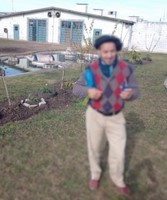
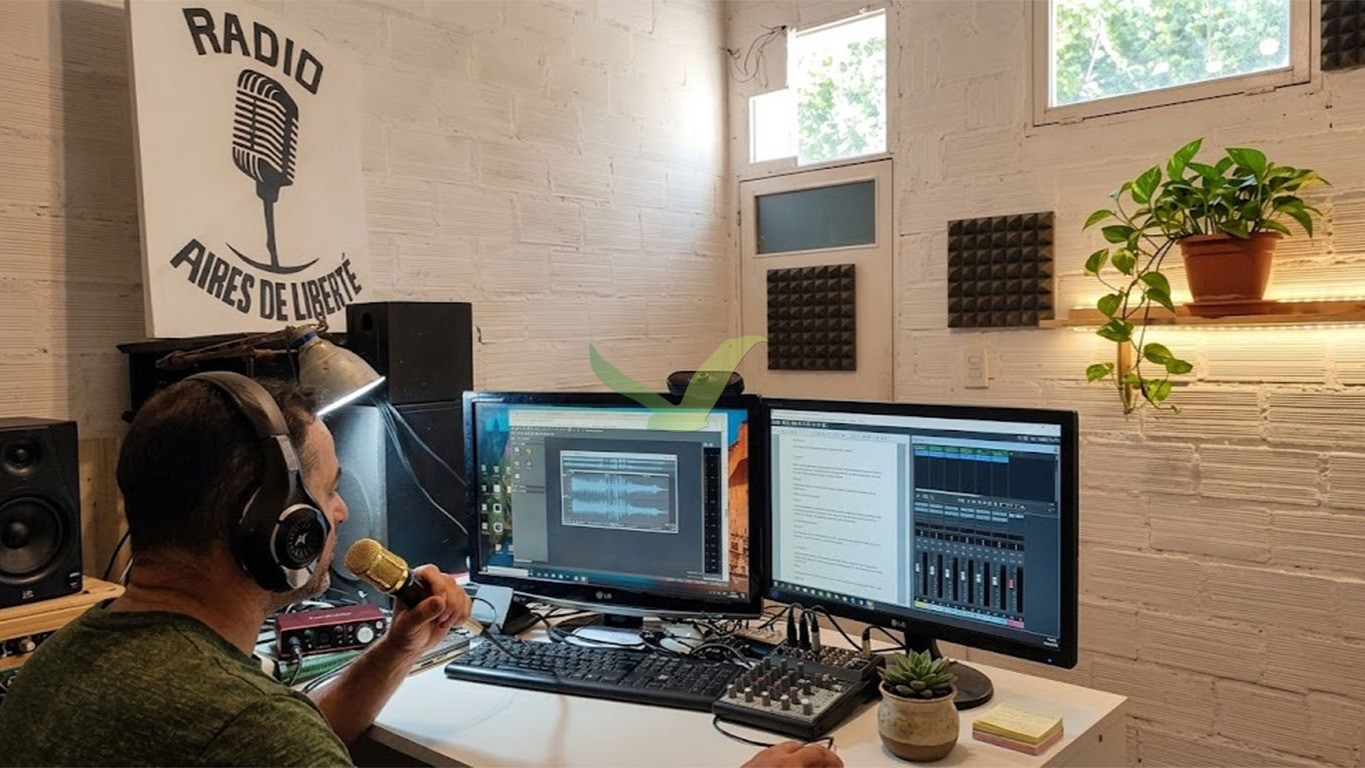
Juan arrived at Unidad Penal N°15 in Batán carrying the weight of a lifetime of fieldwork — and the burden of not knowing how to read or write. Today, in front of the microphone at Cooperativa Liberté's radio station, he hosts his own folklore program and says that, within these grey walls and a tangle of iron bars, he found true dignity through Liberté: the difference, he says, from an old and worn-out system that remains far removed from the people living in incarceration.
It is the space of Cooperativa Liberté, a self-management engine that challenges the traditional prison system to offer work, education, and humanity. It is here that Juan found a new path.
he recalls in front of the Cooperativa Liberté radio microphone. His journey within Liberté took him through different areas of knowledge — from work in the organic garden to the sewing workshop, where he learned to make bags and backpacks. He even took up raising chickens, ducks, and rabbits, activities that brought him back into contact with the land and animals — something he knew well from his life before incarceration.
The deepest change, however, was intellectual. Liberté is supported by many civil organizations and academic institutions, among them the Universidad Nacional de Mar del Plata through its Faculty of Health Sciences and Social Work, the Universidad Popular Liberté (ULIB) itself, Víctimas por la Paz, SAJuR, and other institutions. There, Juan began to settle old debts with his own history: "Here I learned and I keep learning; I didn't know how to read or write, let alone use a computer. I am grateful to Liberté for all of this."
Matera Gaucha
Another milestone was the discovery of communication. The Cooperative has its own radio station, a reclaimed space where words flow without censorship.
Today, through Matera Gaucha, Juan pours his world as a man of the land into every broadcast. Between zambas and chacareras, folklore connects him to his roots and to his audience. "I do what I love — it's a beautiful experience that motivates me and does me good," he explains with pride.
A community of nearly one hundred
Juan's story is not an isolated one. It is part of a collective of nearly 100 people who, alongside the late Judge Mario Juliano — godfather of the project — built a community that includes carpentry, metalwork, a solidarity store, a restaurant, and even a koi carp pond.
Despite resistance from a prison system that sometimes fails to understand these restorative justice processes, Liberté proves that change is possible when real tools are offered. Juan puts it this way: "To anyone who doesn't know Liberté, I would say: get involved. Here we feel free — we take courses, play sports, and we have a wonderful relationship with one another. Liberté is something beautiful; here we don't feel like we're in prison."
Source: Cooperativa Liberté